Where you left off
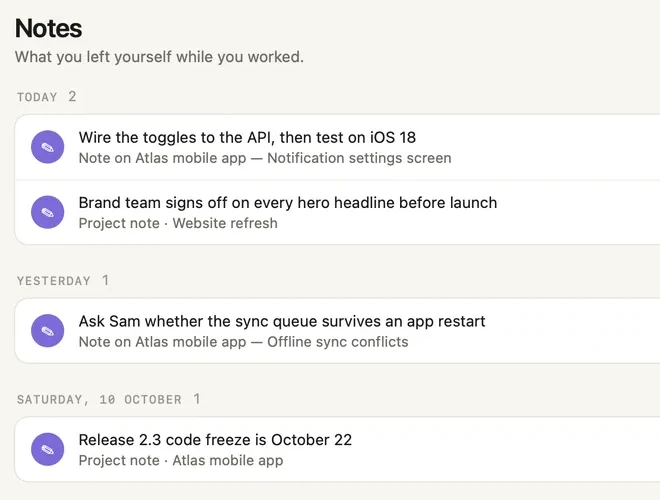
Your note comes first
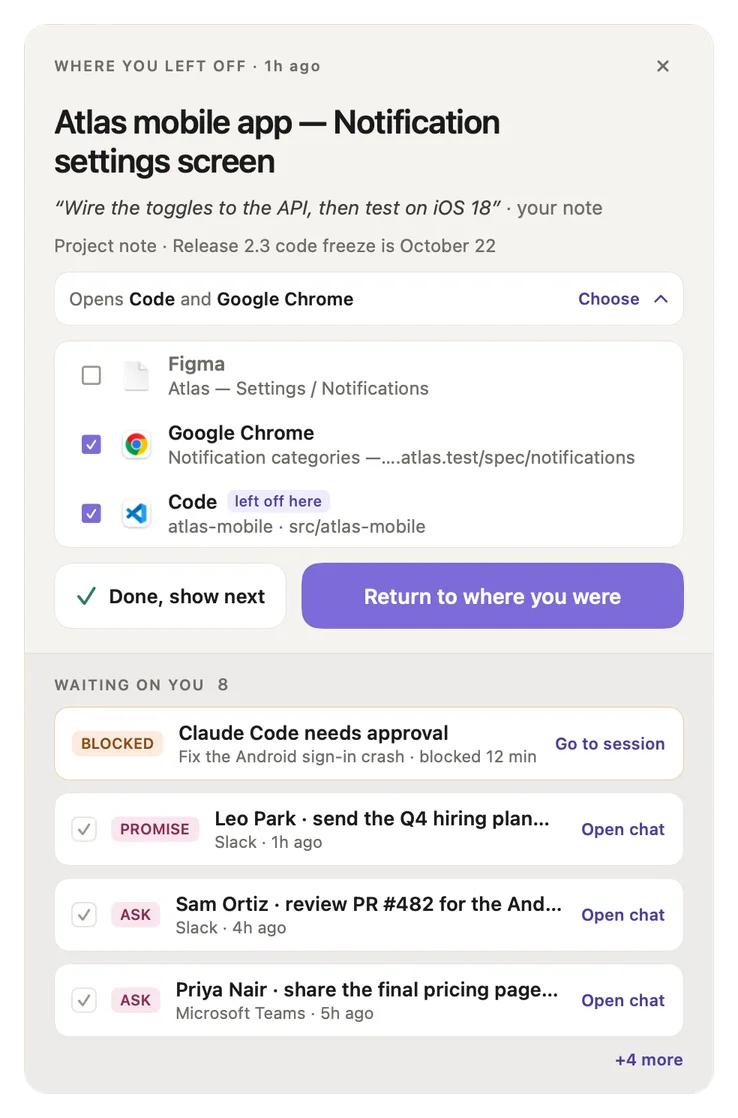
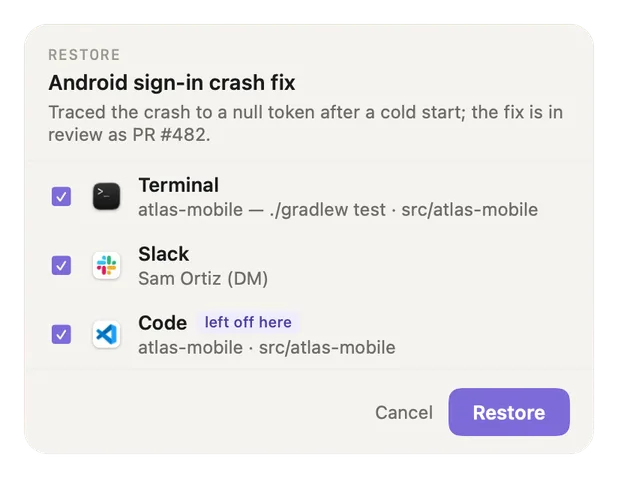
The thread, the line you left with and the newest project note. No note? It shows the question you left open.
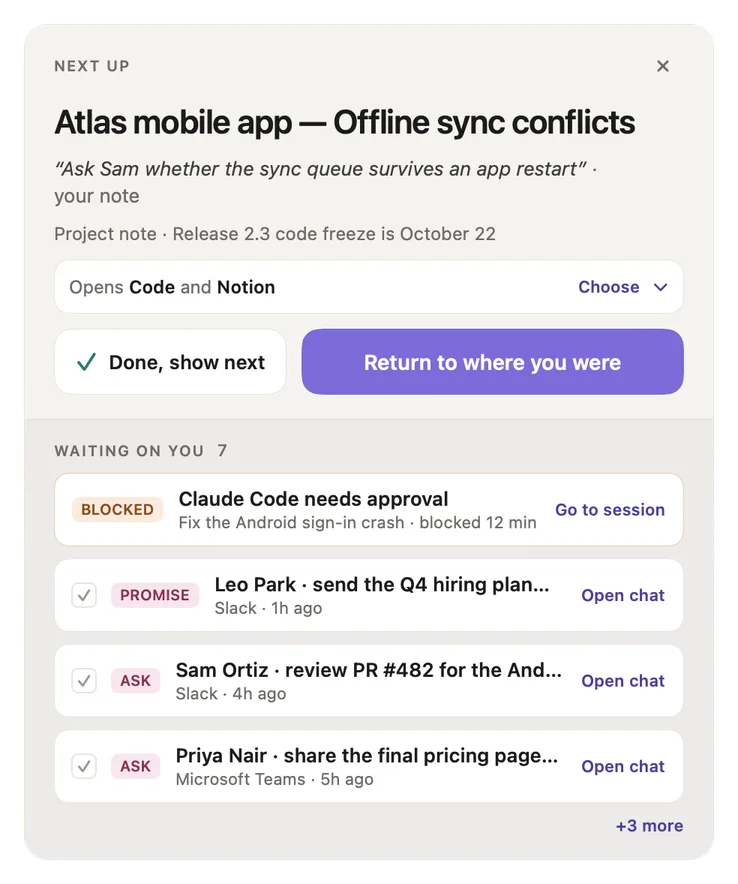
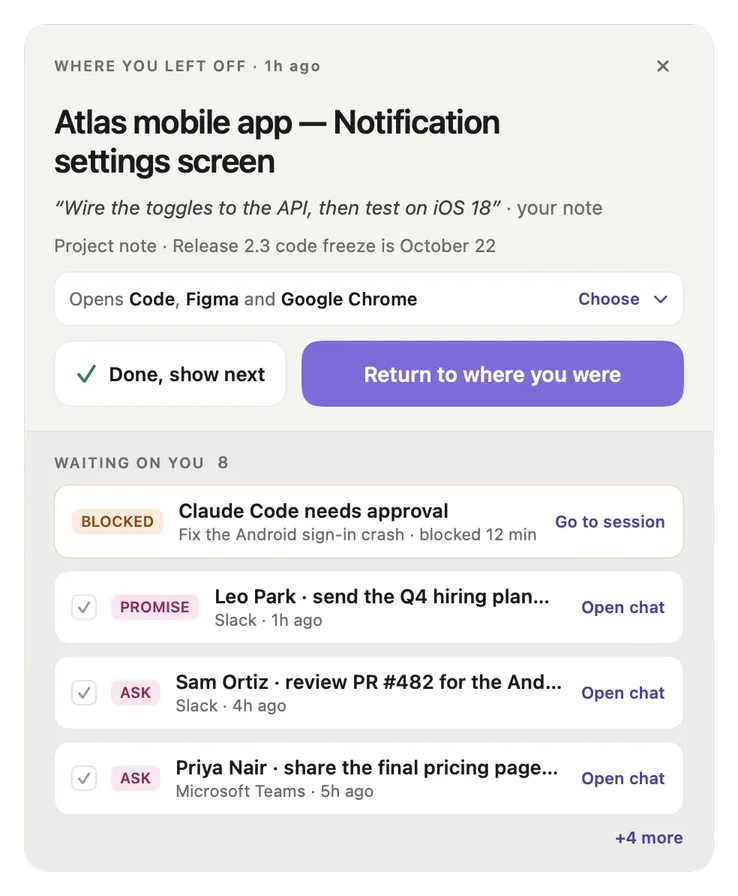
Smart Return hands back the thread you were holding: where you left off, the note you left, and exactly what will reopen. Under it, one list of everything waiting on you.
To stop it after breaks, turn off Settings → Nudges → Smart Return. still works.
It leads with your note and shows exactly what will reopen.
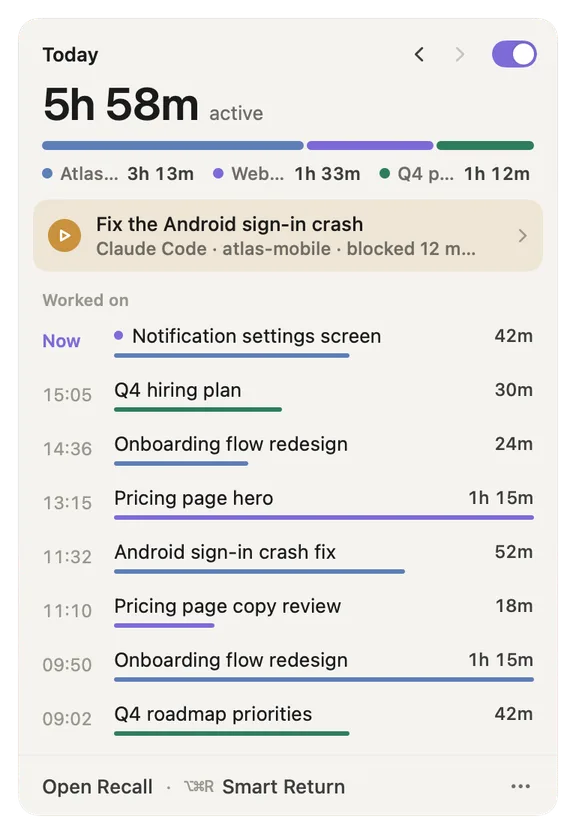
Had a Claude Code or Codex chat open on that thread? That exact chat comes back too, and Recall never opens a second terminal next to the one already running it.
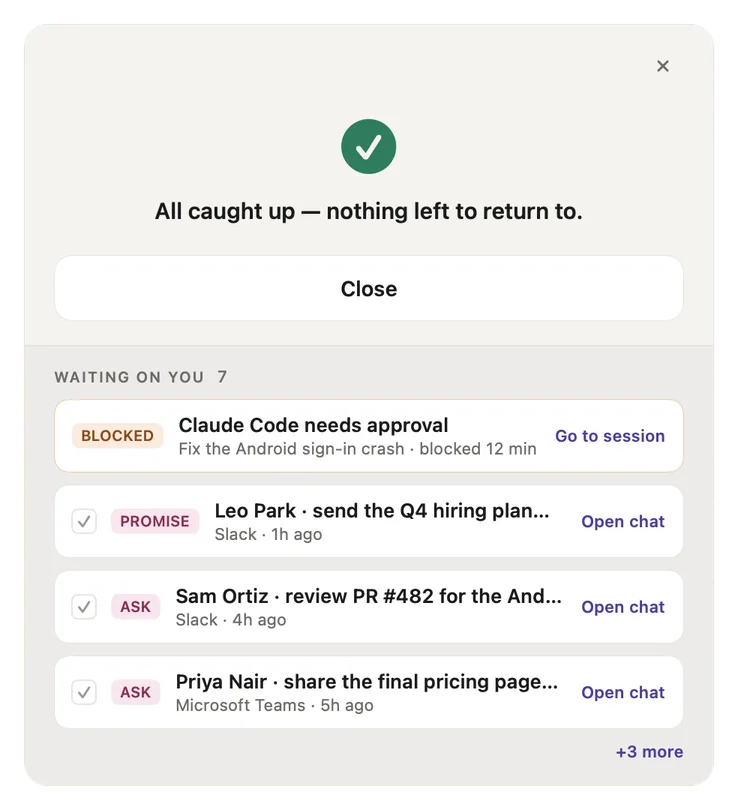
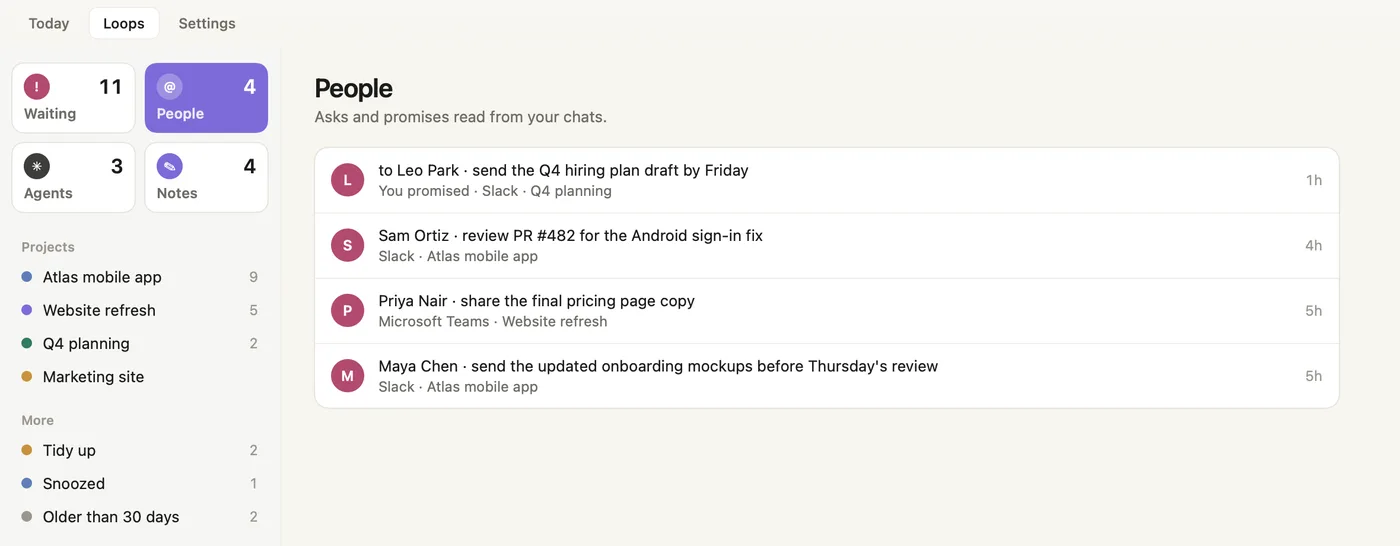
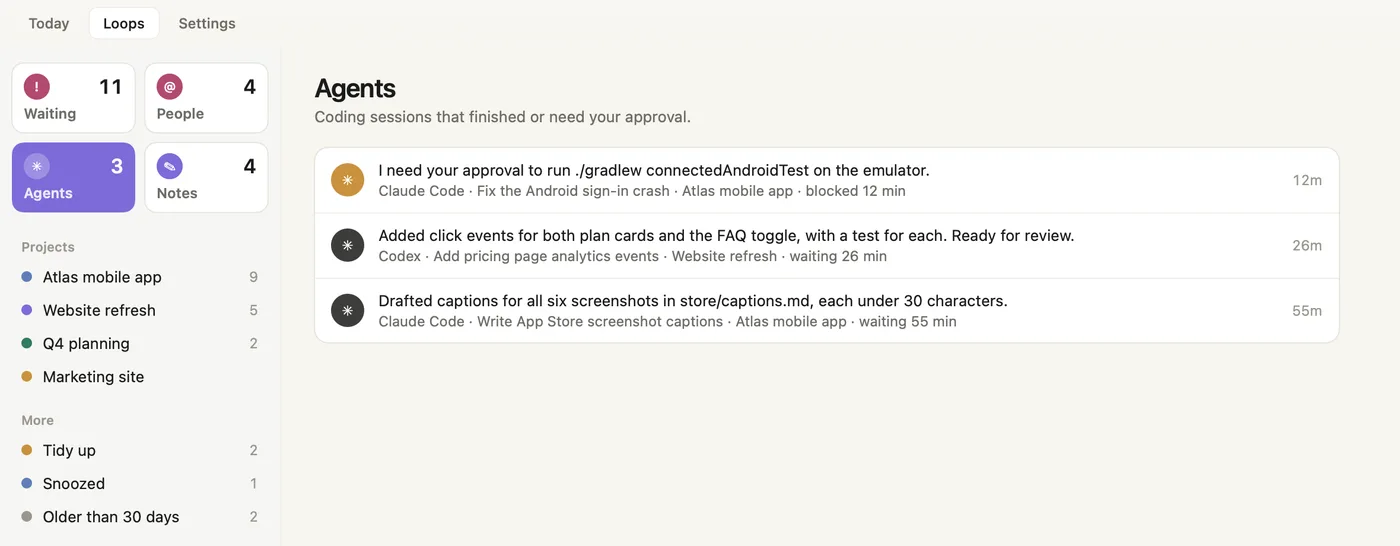
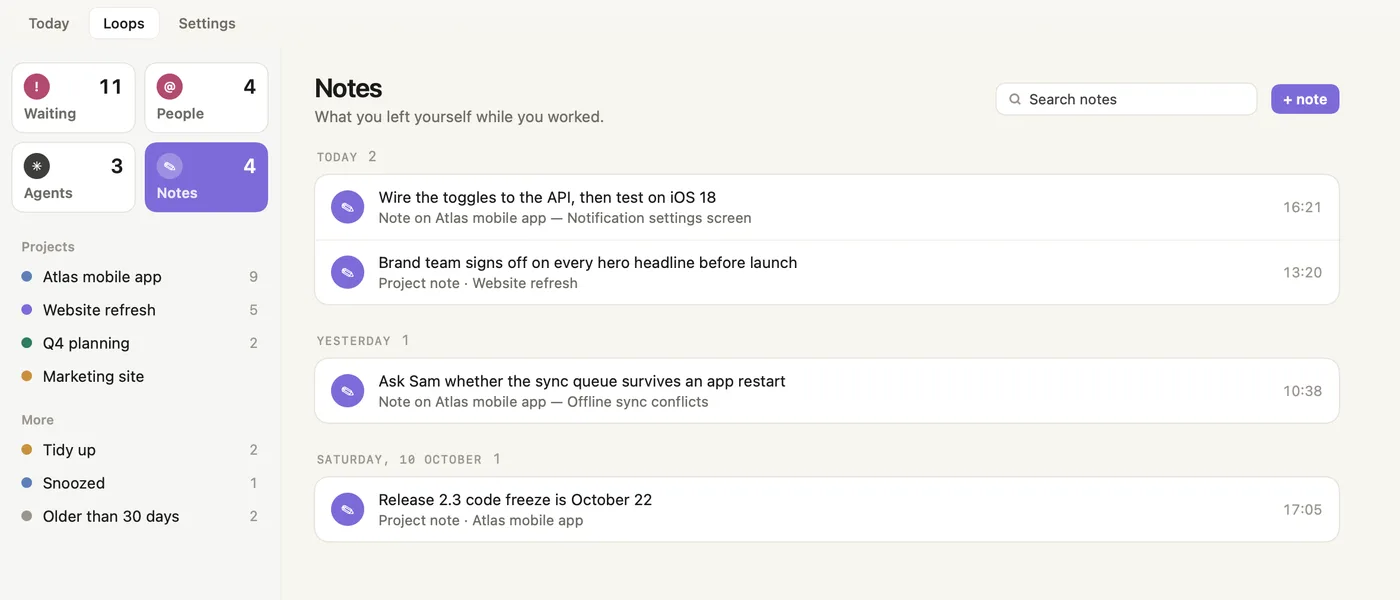
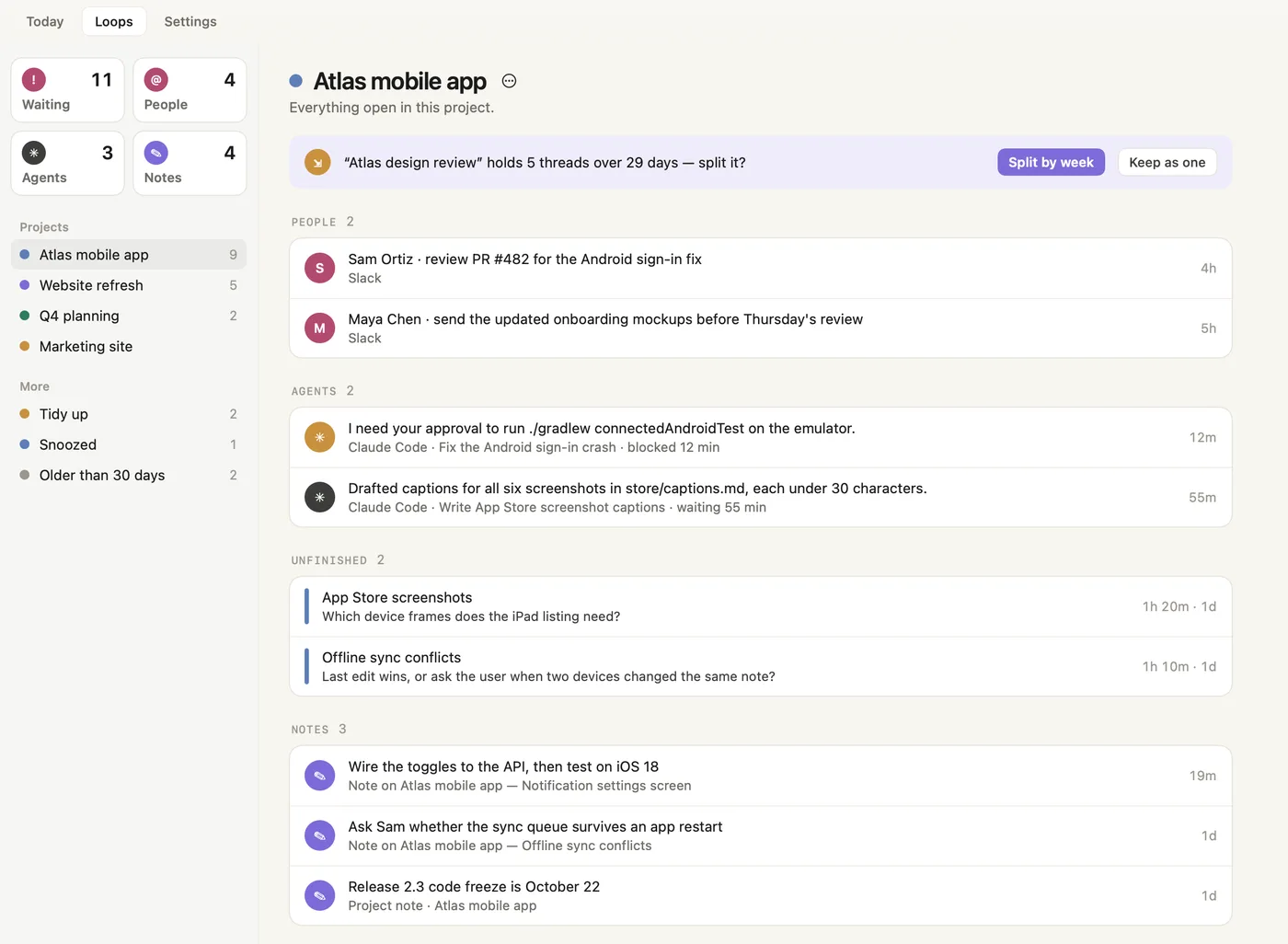
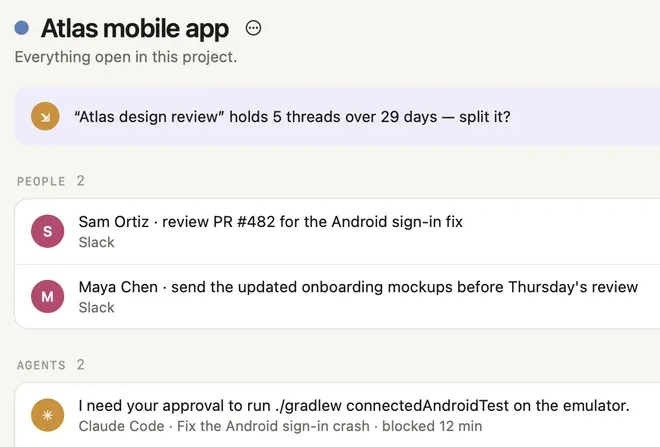
Smart Return shows the top of the list. Loops holds all of it, in lists like Reminders. Open the chat, go to the session or resume the work, and snooze what can wait.
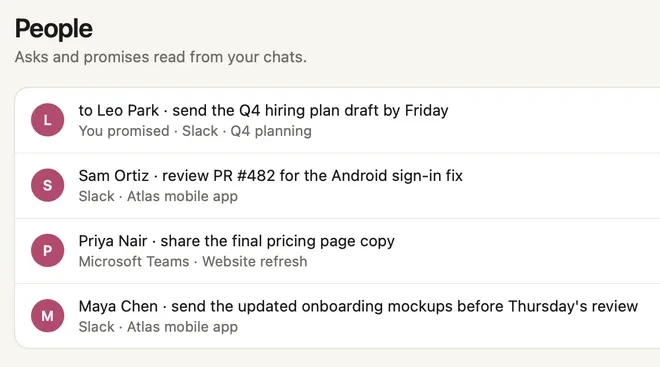
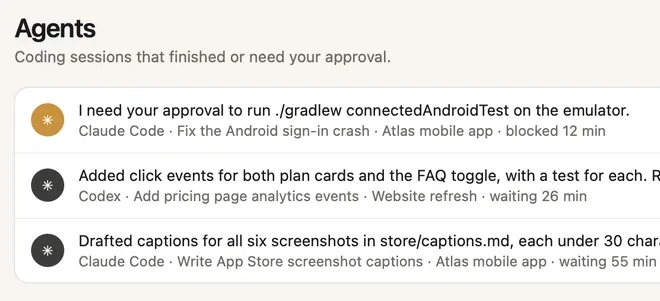
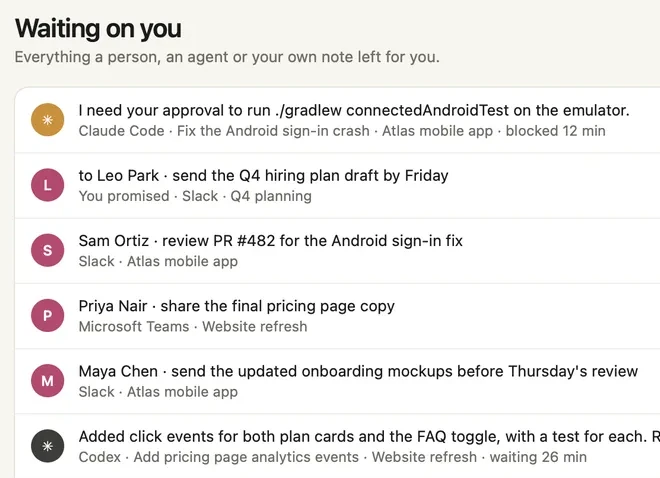
Everything a person, an agent or your own note left for you.
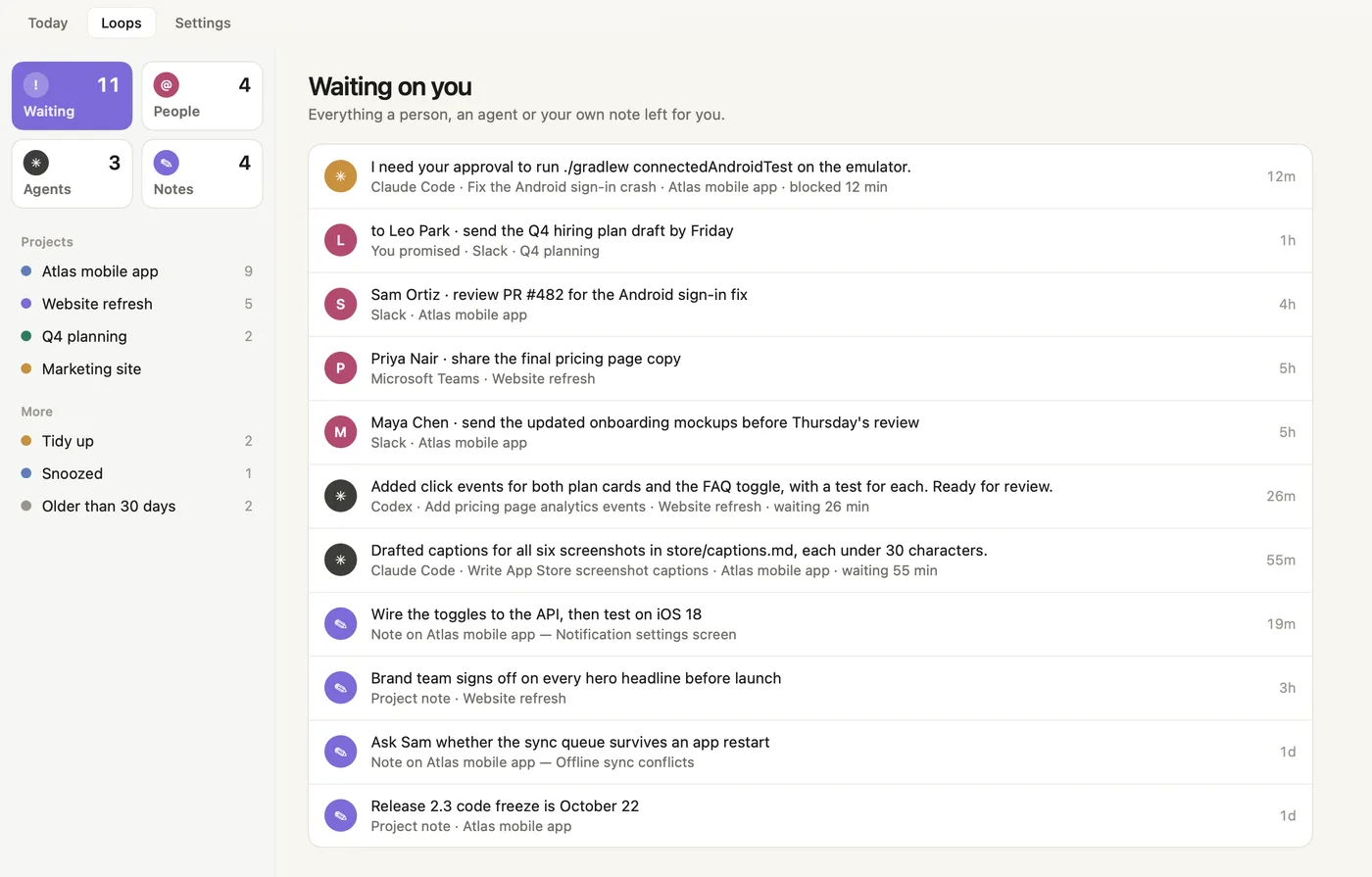
Everything a person, an agent or your own note left for you.
The subreddit is public: anyone can read and search it. The Telegram group is smaller, and the people in it see builds before they ship.
A smaller group we build with directly. Tell us what broke, what you wish it did, and what you want to try first.
The open room. Ask questions, report bugs, request features, and read how other people got their focus back. Nothing behind a login.
Open the subredditRecall holds the thread while life interrupts, then hands it back the moment you return.